
Low Carb vs Keto: Which Diet Is Better for Weight Loss?
Introduction
If you've started researching weight loss, you've probably come across two popular eating styles: the Low-Carb diet and the Ketogenic (Keto) diet. At first glance, they may seem identical because both involve reducing carbohydrate intake. However, they have different goals, levels of restriction, and ways of affecting your body's metabolism.
Many beginners become confused about which approach to follow. Some start a low-carb diet expecting the rapid fat-burning benefits often associated with ketosis, while others jump into keto without fully understanding how it works. This confusion can lead to frustration, inconsistent results, and abandoning the diet altogether.
The good news is that both approaches can be effective when used appropriately. The key is understanding how they differ and choosing the one that best matches your health goals, lifestyle, and commitment level.
In this guide, we'll compare Low-Carb and Keto side by side, explain their advantages and limitations, and help you decide which eating style is right for you.
What Is a Low-Carb Diet?
A low-carb diet simply means reducing your daily intake of carbohydrates compared to a typical Western diet. Instead of consuming large amounts of bread, pasta, rice, sugary snacks, and soft drinks, you replace many of those foods with protein, healthy fats, and vegetables.
Unlike the ketogenic diet, there is no strict carbohydrate limit that defines a low-carb diet. Most people consume somewhere between 50 and 150 grams of carbohydrates per day, depending on their goals and activity level.
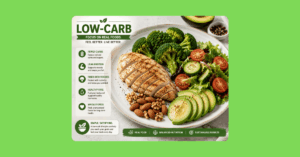
A typical low-carb meal might include:
- Grilled chicken breast
- Steamed broccoli
- Mixed salad
- Olive oil dressing
- A small serving of sweet potato or berries
Because low-carb diets are more flexible, many people find them easier to follow over the long term. They can improve blood sugar control, reduce cravings for sugary foods, and support gradual weight loss without requiring the body to enter ketosis.
For people who want a healthier eating pattern without making major lifestyle changes, a low-carb diet is often an excellent starting point.
What Is the Keto Diet?

The ketogenic diet is a much more structured version of carbohydrate restriction. Its primary goal is not simply to reduce carbs—it is to place the body into a metabolic state called ketosis.
Ketosis occurs when carbohydrate intake becomes so low that the body begins using stored fat as its primary source of energy instead of glucose. During this process, the liver produces compounds called ketones, which fuel the brain and other organs.
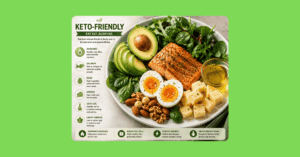
A standard ketogenic diet typically consists of approximately:
- 70–75% healthy fats
- 20–25% protein
- 5–10% carbohydrates
For most people, this means limiting carbohydrate intake to around 20–50 grams of net carbs per day.
Common keto foods include:
-
- Eggs
- Salmon
- Beef
- Avocados
- Olive oil
- Butter
- Cheese
- Nuts
- Leafy green vegetables
Because carbohydrate intake is much lower than on a standard low-carb diet, ketosis generally produces different metabolic effects, including increased fat utilization and reduced appetite.
If you're new to ketosis and want a deeper explanation of how it works, read our related guide:
Related Article: How Does the Keto Diet Work?
Low-Carb vs Keto: What's the Difference?

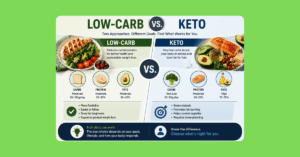
Although both diets reduce carbohydrate intake, their overall purpose and structure differ significantly.
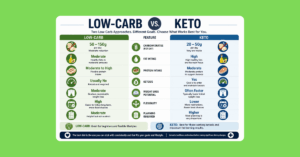
| Feature | Low-Carb | Keto |
| Daily carbohydrates | 50–150 g | 20–50 g |
| Goal | Reduce carbs | Achieve ketosis |
| Fat intake | Moderate | High |
| Protein intake | Moderate to high | Moderate |
| Ketosis required | No | Yes |
| Flexibility | High | Lower |
| Planning | Moderate | More structured |
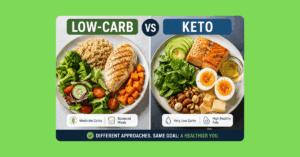
The biggest distinction is that keto is designed to induce nutritional ketosis, whereas a low-carb diet reduces carbohydrate intake without necessarily reaching ketosis.
For someone simply looking to reduce processed foods, low-carb may be sufficient. For someone specifically seeking nutritional ketosis, a ketogenic diet is the approach designed to achieve that metabolic state.
Benefits of a Low-Carb Diet
A low-carb diet offers several advantages, especially for beginners.
Many people experience:
- Fewer blood sugar spikes
- Reduced cravings for sweets
- Gradual weight loss
- Easier meal planning
- Greater flexibility when dining out
- Simpler long-term adherence
Because carbohydrate intake is not extremely restricted, occasional higher-carb meals are less disruptive than they would be on a ketogenic diet.
For individuals seeking a sustainable lifestyle change rather than a highly structured nutrition plan, low-carb can be an effective option.
Benefits of the Keto Diet
The ketogenic diet offers several unique benefits that stem from maintaining ketosis.
Potential advantages include:
- Increased fat utilization
- Reduced hunger due to greater satiety
- Some people report steadier energy levels
- Better control over carbohydrate cravings
- Clearer meal structure for many people
Many individuals also appreciate that keto encourages whole, minimally processed foods while reducing reliance on refined carbohydrates.
However, consistency is essential. Frequently exceeding carbohydrate limits can interrupt ketosis and reduce the effectiveness of the diet.
While every person's nutritional needs are different, the World Health Organization (WHO) recommends building eating habits around a balanced diet that includes a variety of minimally processed foods and supports long-term health.
World Health Organization (WHO)— Healthy diet guidance
Potential Drawbacks of a Low-Carb Diet
Like any eating plan, a low-carb diet isn't perfect for everyone. While it's generally easier to maintain than a ketogenic diet, it also has some limitations that may affect results.
Weight-Loss Results Can Vary
Reducing carbohydrates often leads to weight loss because many high-calorie processed foods are naturally eliminated. Weight-loss results vary considerably between individuals and depend on factors such as total energy intake, food quality, activity, adherence, and the degree of carbohydrate restriction.
Portion Control Still Matters
Some people assume that simply eating fewer carbohydrates allows them to eat unlimited amounts of other foods. In reality, calories still matter. Regularly overeating—even on low-carb foods—can slow or prevent weight loss.
Less Structured
The flexibility of a low-carb diet is an advantage for many people, but it can also become a weakness. Without clear guidelines, it's easier to drift back toward higher carbohydrate intake over time.
Potential Drawbacks of the Keto Diet
The ketogenic diet offers unique benefits, but it also requires greater commitment and planning.
Keto Flu
During the first few days of reducing carbohydrates, some people experience temporary symptoms known as the keto flu, including:
- Fatigue
- Headaches
- Brain fog
- Muscle cramps
- Irritability
These symptoms usually improve as the body adapts, especially when hydration and electrolytes are maintained.
Hidden Carbohydrates
Many processed foods contain unexpected sugars or starches that can interrupt ketosis. Reading nutrition labels carefully becomes an important habit.
Meal Planning Is More Important
Because keto has stricter carbohydrate limits, planning meals ahead of time helps avoid accidental high-carb choices.
Fortunately, following a structured meal plan makes this much easier.
Who Should Choose a Low-Carb Diet?
A low-carb approach may be the better option if you:
- Are completely new to healthier eating
- Prefer greater flexibility
- Want gradual, sustainable lifestyle changes
- Don't want to count carbohydrates closely
- Primarily want to reduce processed foods and added sugars
Many people successfully improve their health with a moderate reduction in carbohydrates without following a strict ketogenic diet.
For additional practical nutrition and meal-planning guidance, the U.S. National Institute on Aging offers helpful information on healthy eating habits, balanced nutrition, and building sustainable dietary routines.
U.S. National Institute on Aging — Healthy eating, nutrition, and diet
Who Should Choose the Keto Diet?
A ketogenic diet may be more appropriate if you:
- Want a structured nutrition plan
- Are committed to maintaining ketosis
- Prefer clearly defined meal guidelines
- Want to maximize fat utilization through carbohydrate restriction
- Enjoy planning meals in advance
Many beginners struggle not because keto is ineffective, but because they spend too much time guessing what they should eat.
A personalized plan can remove much of that uncertainty.
Related Article: Keto Meal Plan for Beginners
Common Mistakes When Choosing Between Low-Carb and Keto
Many beginners unintentionally slow their progress by making avoidable mistakes.
Mistake #1: Assuming They're the Same Diet
Although both reduce carbohydrate intake, only keto is specifically designed to maintain ketosis. Mixing the two approaches often leads to inconsistent results.
Mistake #2: Eating Too Much Protein
On keto, excessive protein may make it more difficult for some individuals to maintain ketosis because part of the protein can be converted into glucose.
Mistake #3: Ignoring Healthy Fats
Healthy fats aren't simply allowed on keto—they're an important energy source.
Examples include:
- Avocados
- Olive oil
- Salmon
- Nuts
- Seeds
Mistake #4: Forgetting Hydration
Reducing carbohydrates can increase water loss during the early stages of keto. Drinking enough water and maintaining electrolyte balance becomes especially important.
Mistake #5: Not Planning Meals
Many people fail because they don't know what to eat when they're busy.
Planning meals in advance removes much of the daily decision-making.
For more beginner mistakes, read:
Related Article: Common Keto Mistakes Beginners Should Avoid
Is a Personalized Keto Meal Plan Worth It?
One of the biggest reasons people quit keto isn't because the diet doesn't work—it's because they become overwhelmed by planning meals, calculating carbohydrates, and deciding what to eat every day.
Generic meal plans found online often fail because they don't consider factors such as:
- Age
- Weight
- Goals
- Food preferences
- Allergies
- Lifestyle
- Cooking experience
A personalized meal plan simplifies the process by providing recommendations tailored to your situation.
Instead of asking yourself:
“What can I eat today?”
you already have a structured plan that supports your goals.
This can make it easier to stay consistent, which is often one of the most important factors in achieving long-term success.
If you'd like to see an example of a personalized keto program, our in-depth review explains how it works and what it includes.
To personalized keto program, read: Custom Keto Diet Review
Frequently Asked Questions
Is Keto Better Than Low-Carb?
Neither approach is universally “better.” The right choice depends on your goals, preferences, and ability to follow the eating plan consistently.
Can You Lose Weight on a Low-Carb Diet?
Yes. Many people lose weight by reducing refined carbohydrates and choosing nutrient-dense whole foods while maintaining an appropriate calorie intake.
Which Diet Burns Fat Faster?
A ketogenic diet increases reliance on fat and ketones for energy during nutritional ketosis, but that does not guarantee faster loss of body fat. Weight-loss results depend on factors including overall energy intake, food quality, activity, adherence, and individual response.
Is Keto Safe for Beginners?
Many beginners successfully follow keto with proper planning. Learning the basics and following a structured meal plan can make the transition smoother.
If you have diabetes, kidney disease, or another medical condition, consult a qualified healthcare professional before making significant dietary changes.
Which Diet Is Easier to Maintain?
Many people find a moderate low-carb diet easier because it offers greater flexibility. Others prefer keto because the clear guidelines help reduce decision fatigue. The best choice is the one you can maintain consistently over time.
Conclusion
Both Low-Carb and Keto diets can support weight loss and healthier eating habits, but they are designed for different purposes.
A low-carb diet focuses on reducing carbohydrate intake while providing flexibility and gradual lifestyle improvements. It's often a practical starting point for people who want to improve their eating habits without following strict nutritional rules.
The ketogenic diet, on the other hand, is a more structured approach that aims to achieve ketosis through significant carbohydrate restriction. For those seeking a clearly defined plan focused on fat utilization, keto may be the better fit.
Whichever path you choose, long-term success depends less on finding the “perfect” diet and more on choosing an approach that fits your goals, preferences, and daily routine.
If you're considering keto and want to avoid the guesswork of building your own meal plan, a personalized program can make the process much simpler.
👉 Next Step: Read our detailed Custom Keto Diet Review to see how a personalized keto meal plan is created and whether it may be a good fit for your goals.